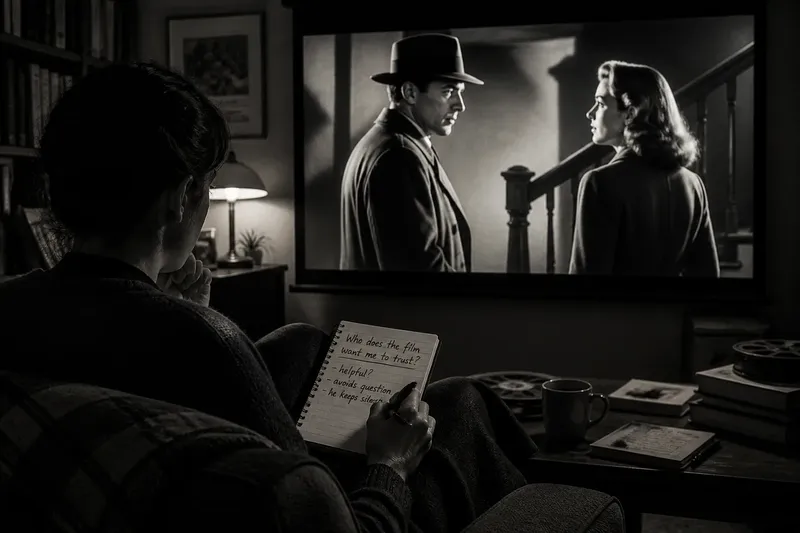
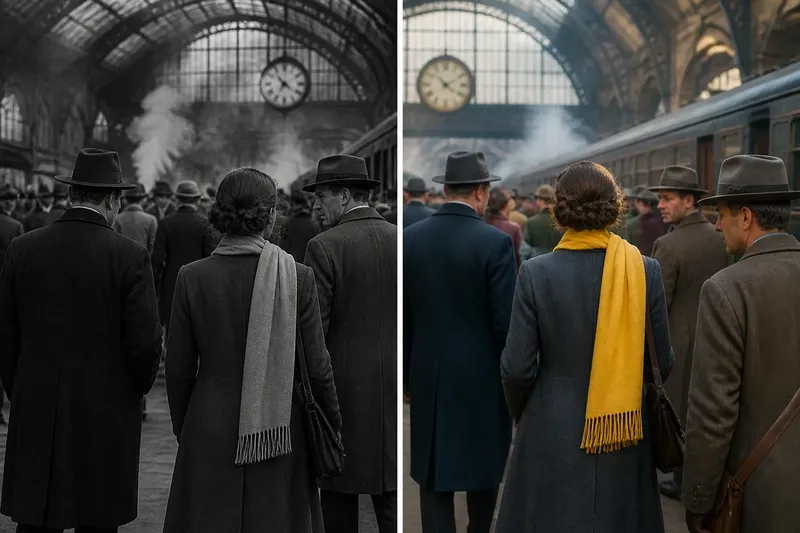
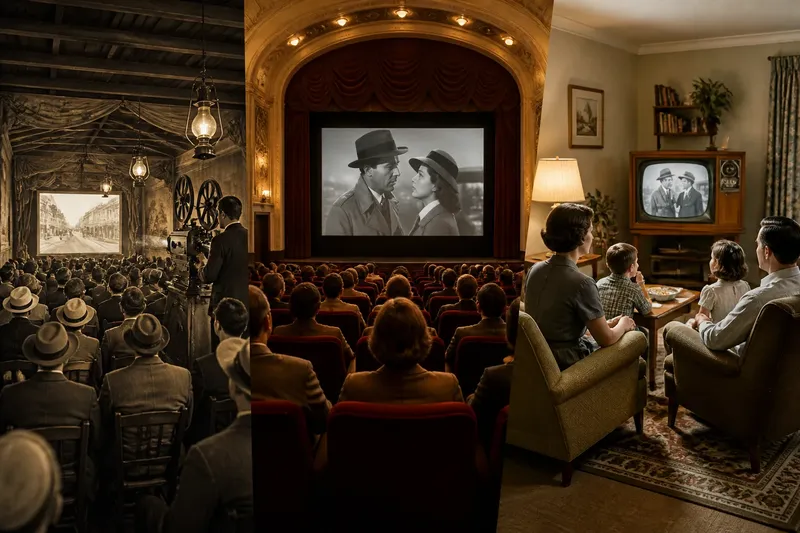
A Rainy Afternoon Double Feature Built Around One Shared Setting
Plan a rainy afternoon double feature around one shared setting, with a viewing order and scene-pairing method that make the comparison vivid.
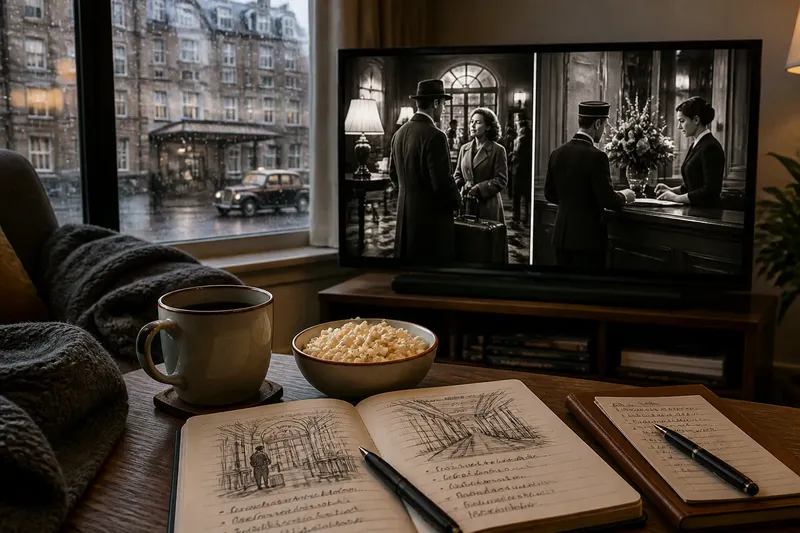
A shared setting gives a rainy afternoon double feature a clear thread: one film may make a hotel feel like a refuge, while another turns its corridors into places of scrutiny. Choose the place first, then pair films in which it shapes what characters can do. The contrast—not a stack of notes—will carry the discussion.
What makes a setting work for a double feature?
A useful setting affects the action rather than simply appearing behind it. A railway station can bring strangers together and hurry them apart; a house can make privacy possible while exposing family tensions. Look for a location that recurs or influences important encounters.
Before choosing the films, describe the place in a short phrase: “a hotel organised around its lobby” or “a town that people keep leaving”. This is a starting point, not a conclusion. It gives you a question to carry into both screenings.
How do you choose films that share a setting?
Begin with the place, not with a requirement that the films share genre or mood. A comedy and a mystery can both use a boarding house, but make its routines feel entirely different. That difference can make the setting easier to compare.
Search film descriptions, library catalogues, programme notes or a streaming collection with specific terms such as “courtroom”, “seaside town” or “train journey”. Read a short synopsis to check that the location shapes scenes rather than appearing only in passing. Consider availability and mood, too: a difficult-to-find title or two especially demanding films may make the afternoon less enjoyable.
Imagine you have chosen two hotel films. In the first, a guest repeatedly uses the lobby to meet people; in the second, staff move through the same kind of space to keep the day running. Watch the first film, then choose one lobby scene where a meeting changes the story. In the second, select a scene where staff manage the flow of visitors. Comparing those scenes gives you a concrete question: does the lobby offer freedom to its guests while imposing duties on its workers?
Which viewing order suits the pairing?
Put the film that gives you the clearest sense of the place first if you want a mental map for the second. If the more oblique film will make the other one newly interesting, save it for later. You can also begin with the lighter film if that suits your energy.
Before starting, silence phone alerts, put water within reach and decide where the films are available. Keep the arrangements simple. The aim is to make it easy to stay with the films, not to turn an afternoon at home into an event that needs managing.
What details help you compare the settings?
Rather than recording every striking detail, use the place to choose a scene pair. After each film, select one moment when the setting changes what a character can do. A doorway that keeps a conversation public, a queue that delays an escape or a window that exposes a private room can each show the location shaping the story.
Then compare what the scenes ask of the characters. Does one have to wait while another can pass freely? Does a familiar room welcome one person and unsettle someone else? These questions focus discussion on the films’ choices rather than on a general verdict such as “the hotel is oppressive”.
Say you have watched one film in which a character can leave a crowded station unnoticed and another in which the station staff recognise everyone who passes. Pair the departure scene from the first with a scene of staff greeting a regular in the second. The comparison suggests a useful difference: the same public bustle may offer anonymity to a traveller and familiarity to a worker.
What questions help connect the two films?
Do both films need to use the same kind of place?
No. Two stations make a close comparison, while a station and a hotel can reveal different kinds of temporary public space. Choose the connection that gives you a clear scene to compare in each film.
Can the films come from different periods?
Yes. A difference in period may make changes in technology, manners or architecture more noticeable. If those changes distract from the setting’s role in the story, choose films closer in period instead.
What if the shared place appears only briefly?
Choose another film if the location does not shape a scene or relationship. A place mentioned in a synopsis is not enough to sustain a double-feature comparison.
How should you discuss the pairing?
Choose one scene from each film and describe what the setting allows or prevents there. Then compare the two effects without ranking the films or insisting they make the same point.
How can you keep the comparison enjoyable?
Take a proper break between screenings: stand up, stretch and let the first film settle. You do not need to write a review or consult other viewers’ opinions. If an idea from the first film stays with you, keep it in mind; otherwise, let the second film make its own impression.
After both films, put the selected scenes side by side in your mind. Ask what changed: the people using the place, the rules governing it, or the way the camera presents it? For example, a film may treat a corridor as a route to privacy, while its companion makes that same kind of corridor feel exposed. The comparison becomes more precise when you can point to what the scenes show.
What can you take into a future rewatch?
Leave the pairing with one question rather than a verdict: would the hotel feel different if the story followed its staff, or does the town change as the character’s view of it changes? A question gives you a reason to return without requiring a formal review.
Keep the film titles together with the scene pair you chose. The next time you watch a story set in a station, house or seaside town, use that comparison to notice who can move freely, who must wait and who seems to belong. That is a useful way to keep the shared-setting question alive beyond the afternoon.