The Classic-Film Quiz Trap: Discuss the Scene, Not the Trivia
Classic-film discussion gets beyond trivia when you use a specific moment to explore a character’s choices, the film’s context and differing readings.
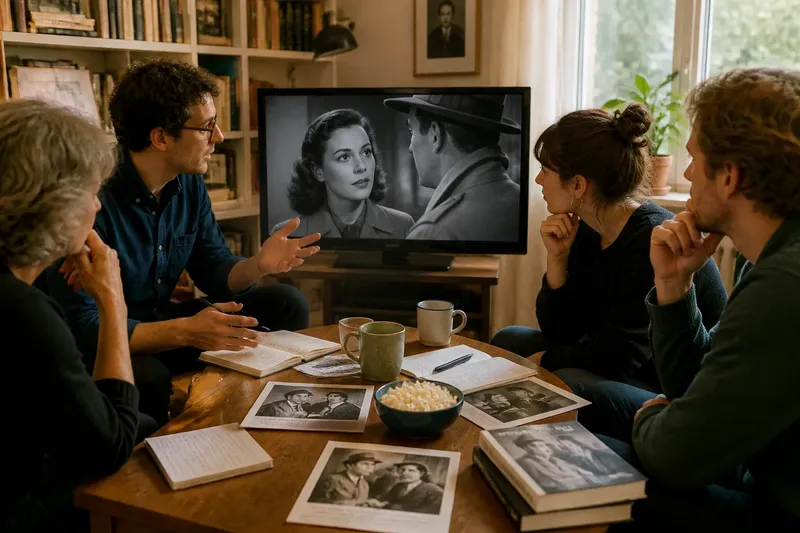
A classic-film discussion can stall when someone asks who played the neighbour and nobody remembers. A better way to talk about a classic film is to follow a choice the film makes: what does the scene conceal, emphasise or leave unresolved? That question gives the group a shared subject without turning memory into a test.
How can film choices open up discussion?
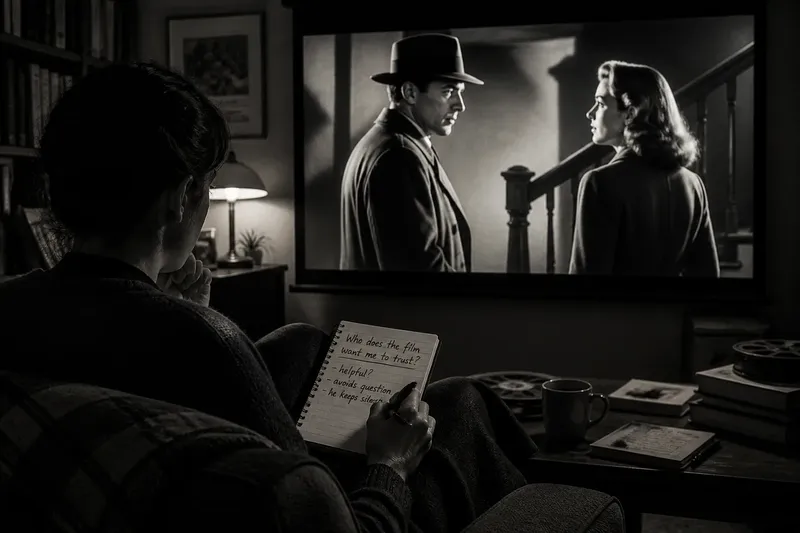
Instead of asking everyone to recall plot details, ask how the film guides its audience. A character may be kept at the edge of a scene, a crucial action may happen off-screen, or a cut may arrive before a reaction is clear. These are choices viewers can discuss even if they have forgotten a name or a date.
Try questions such as: “Why does the film keep us outside the room?” or “What changes because we hear the argument but do not see it?” They shift attention from what happened to how the film presents it. People can disagree about the effect while referring to the same material.
What can a film leave unsaid?
Ellipsis is a term for something a film leaves out, such as an event, explanation or stretch of time. The gap may invite viewers to infer what happened, or it may keep them uncertain. Ask what the film expects you to supply, and whether another choice might have changed your judgement of a character.
For instance, imagine a fictional drama that cuts from a character closing a shop to a neighbour finding the door open the next morning. The group has no scene showing how the door came to be open. One viewer might infer carelessness; another might suspect an unshown interruption. The useful discussion is not to settle the invented plot as a fact, but to ask which details in the two scenes make each inference plausible.
How does viewpoint shape what we know?
A film’s viewpoint is the information it gives the audience and the limits it sets on that information. It may follow one character closely, keep several characters at a distance, or reveal a fact before the characters know it. Those choices affect suspense, sympathy and uncertainty.
Ask who knows what at a particular point. Does the audience see a letter before its recipient does? Are we kept with a character who misunderstands a conversation, or shown details they miss? Such questions make room for different readings without requiring specialist terms.
What questions help discuss film choices?
Why might a director keep an event off-screen?
An omitted event can preserve uncertainty, avoid a direct explanation or make the aftermath more important than the action. Ask what the audience learns from the consequences and what remains open.
How can a cut change a scene’s meaning?
A cut can link two images, withhold a reaction or make a jump in time feel abrupt. Point to what appears immediately before and after it, then consider what connection the edit invites.
What does limited viewpoint mean?
It means the film restricts what viewers know, often by staying close to one character’s experience. Ask what that person can see or understand, and what the audience is left to infer.
Can a film’s ambiguity be discussed without resolving it?
Yes. Describe the competing readings and the details that support each one. The group can leave a question open if the film gives no clear answer.
How can a group keep disagreement useful?
Separate what appears on screen from the meaning you assign to it. “The camera stays in the hallway” describes a choice; “the film is making us distrust the character” is an interpretation. Both matter, but distinguishing them helps the group explain its reasoning rather than argue over who has remembered correctly.
If a disagreement turns on a detail, check the programme notes or revisit the scene if the group has access to the film. If the detail cannot be confirmed, keep it as a question rather than building a firm claim on uncertain memory.
Consider this invented discussion: a group remembers a fictional comedy in which a character gives a speech while the camera remains on a listener. They begin with the observation that the speaker is not shown. One person thinks the choice makes the speech seem self-important; another thinks the listener’s expression becomes the real subject. They decide that the scene can support both readings, and note that the film’s attention shifts from the words to their effect. The result is a clearer account of the disagreement, not a verdict on which viewer is right.
What should you check before settling on a reading?
- Check whether the detail is visible or audible in the scene; if it is clear, use it as evidence, but if it is uncertain, frame it as a question or revisit the moment.
- Check who is present when information is revealed; if one character knows more than another, discuss how that difference shapes suspense, but if their knowledge is unclear, avoid claiming the film has confirmed it.
- Check whether the event itself is shown; if it is omitted, consider what the gap invites viewers to infer, but if it appears on screen, discuss how its presentation shapes the response.
- Check what image or sound follows a cut; if the pairing suggests a connection, explain that reading, but if the link is ambiguous, keep alternative interpretations open.
- Check whether a claim depends on a remembered name, date or production detail; if a reliable programme note confirms it and it bears on the scene, add it as context, but if not, leave it out.
- Check whether another reading fits the same visible evidence; if it does, compare what each interpretation explains, but if it does not, ask what detail would change your view.
How can a film’s context help without taking over?
Context is most useful when it answers a question raised by the film. A programme note about a performer, production choice or period convention may clarify why a moment looks or sounds unusual. Introduce the information briefly, then return to the film’s choices rather than making background knowledge a test of belonging.
For classic-film discussion, the better alternative to a trivia round is not another kind of quiz. Ask what the film lets its audience know, what it withholds and how that shapes a response. On a rewatch, follow one such choice and notice whether it still supports the same reading—or opens a different one.