The One-Question First Watch: Pick a Point of Attention
A one-question first watch gives you a clear thread through a classic film, without turning its surprises into a hunt for clues or a verdict.
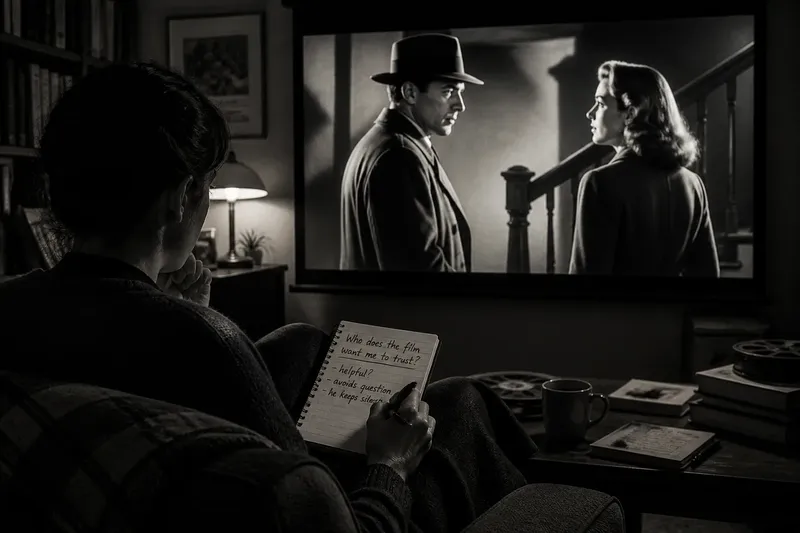
A one-question first watch gives a classic film a clear thread to follow without turning it into a hunt for clues. Before pressing play, choose one open question about what you are watching; then notice whether the film answers it, complicates it or replaces it with a more useful question. The point is not to solve the story in advance. It is to see how the film directs your attention.
Say you have chosen a fictional black-and-white mystery from a library collection. You know only its title and genre, so you ask, “Who does the film want me to trust?” You watch without pausing to research, jot down a few brief observations afterwards, and find that the question has shifted by the final scene. The shift is worth noticing: it shows how a film can change the terms of your attention before it settles its plot.
What makes a good first-watch question?
A useful question is open enough to allow several answers, but specific enough to guide your attention. It should concern something the film can reveal through scenes: a character’s motives, the source of tension, a relationship’s changing balance or the way a setting shapes a decision.
“Will I like this?” is too broad to guide your watching. “When does the central character begin to doubt the person helping them?” gives you something to notice without dictating the answer. The question need not identify a grand theme or prove that you have understood the film.
Phrase it as a question, not a prediction. “Why does the visitor keep returning?” leaves the film free to answer unexpectedly; “The visitor is secretly the villain” turns the watch into a search for confirmation. A first question should invite attention, not recruit you to defend a theory.
- Character: Notice what one person appears to want; if that desire changes, follow the change, and if it does not, consider what stands in its way.
- Trust: Notice which actions make someone seem reliable or doubtful; if those impressions shift, track the moment, and if they remain steady, ask what supports them.
- Conflict: Notice what keeps two people from speaking plainly; if the obstacle changes, follow its effect, and if it persists, watch how they work around it.
- Setting: Notice how a room, street or landscape affects what someone can do; if it restricts them, follow the consequences, and if it does not, shift attention to another question.
- Form: Notice a returning place, object or gesture; if its meaning changes, mark the change, and if it does not, consider what the repetition adds.
- Information: Notice who knows what and when; if access shifts, follow who gains or loses influence, and if it stays fixed, look at how the film makes that knowledge visible.
Choose one direction, not a question from every line. One thread is easier to carry than a list of assignments.
How does the invented viewing unfold?
Imagine a viewer settles down with the fictional mystery and writes “Who does the film want me to trust?” on a scrap of paper. The wording concerns the film’s invitation, not a duty to identify the correct suspect. The viewer has not searched for reviews, a cast list or an explanation. The only preparation is choosing the film and setting the question.
In an early scene, a neighbour offers the protagonist a practical favour. The viewer notes “helpful?” Later, the neighbour avoids a direct question, and the protagonist accepts the dodge. That moment unsettles the first impression, but there is no need to stop the film to check whether the actor appeared in another mystery or what a prop might signify.
As the story continues, trust becomes less about identifying a single honest person and more about noticing who controls information. The protagonist withholds something too. The question has changed from “Who is trustworthy?” to “What does the film count as trustworthy behaviour?”
At the ending, a small choice carries more weight than a speech. The viewer’s notes contain three observations: the favour, the avoided question and the protagonist’s silence. Afterwards, the viewer can explain what shifted their thinking and what remains unresolved. The result is not a verdict on the mystery; it is a clearer account of how the film made trust feel uncertain.
Keep notes short enough that your eyes return to the screen quickly.
What should you note without interrupting the film?
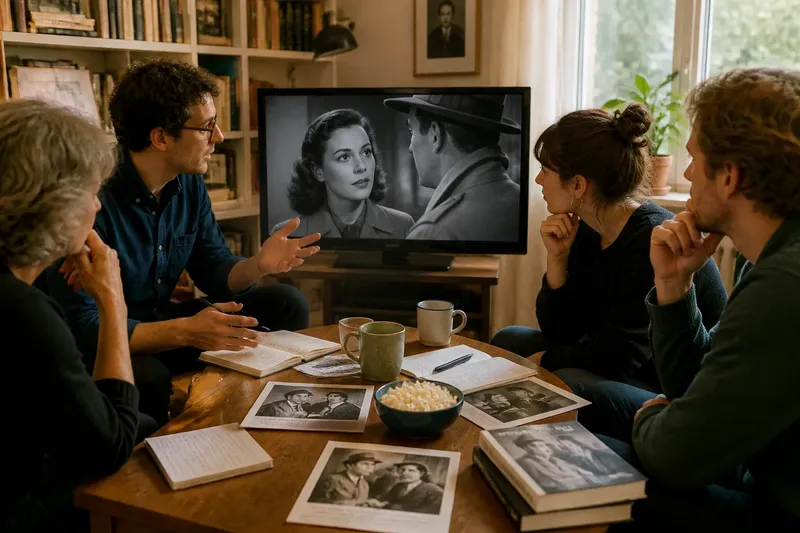
Write a word or compact phrase when a moment bears on your question. “Keeps the key”, “looks away” or “asks twice” is enough. A notebook beside the chair works well, as does a scrap of paper to review after the credits. Avoid recording every scene, line or character; that turns a point of attention into transcription.
If the question slips from mind, let it. You can glance at the scrap after the film rather than stopping playback. If you miss a detail, allow the story to continue. A first watch is not an exam, and an uncertain memory can be a reason to revisit a scene later.
Do not force each moment to serve the question. A film may take a long detour, or your chosen thread may matter less than another element. Notice the drift rather than treating it as failure. If the question no longer fits, note what displaced it and keep watching.
What can you ask after the credits?
What if the film never answers my question?
An unanswered question can still show how the film organises uncertainty. Note what evidence it offered, what it withheld and whether the absence of an answer feels deliberate or simply unresolved to you. Then decide whether that uncertainty is the part you want to follow on a second viewing.
Can my question change while I watch?
Yes. Keep the original wording visible, then jot down the new question when a scene shifts your attention. Comparing the two afterwards shows how the film altered your expectations without requiring a fixed interpretation.
Should I look up unfamiliar references straight away?
For this method, leave research until the viewing is over. Mark a name, object or phrase with a question mark, then decide afterwards whether checking it would clarify your response or distract from what the film already made clear.
What if I cannot think of a question before pressing play?
Use a simple prompt tied to the film’s apparent situation, such as “What is this character trying to avoid?” You can also watch without a prepared question and choose one after the opening gives you something concrete to follow.
How can you review notes without reducing the film to a verdict?
Read your notes in order and separate what you saw from what you inferred. “The neighbour changes the subject” describes an action; “the neighbour is hiding a crime” is an interpretation. Keeping those distinct lets you explain why your view shifted without treating your first impression as a result to defend.
Try arranging the notes as a small chain: an observation, the expectation it created, and the later moment that changed or complicated it. This is more revealing than a string of reactions because it shows how the film guided your thinking. If there is no turning point, that is useful too: perhaps the question stayed open, or perhaps it was not the most fruitful thread.
In the invented mystery, the viewer records that the neighbour first seemed dependable, that the protagonist’s silence complicated the idea of trust, and that control of information may be worth following. The notes do not settle whether the neighbour is innocent. They show precisely why the viewer wants to return to the film.
When is it useful to watch again?
A return viewing can follow a new question rather than repeat the first one. If the first watch followed trust, the next might track how the film signals withheld information through pauses, entrances or recurring objects. Choose a fresh point of attention after considering what the first watch left open.
Research also has a place after the first encounter. A programme note, a reliable film reference or a cast list can help with unfamiliar context, but begin with the film’s own evidence before letting outside information reshape your memory. If you discover a reference you missed, ask whether it changes the scene’s meaning or simply adds background.
The one-question first watch works best as a light frame, not a rule for extracting a single meaning. Choose one question you genuinely want the scenes to answer, let the question change when the film gives you reason, and keep your notes spare. That way, a later viewing can begin with a precise curiosity rather than an attempt to remember every plot detail.