Before the Living Room: Where Films Were Watched
Where films were watched shaped who gathered, when a screening began and how attention was shared. Trace the shift from temporary halls to cinemas and homes.
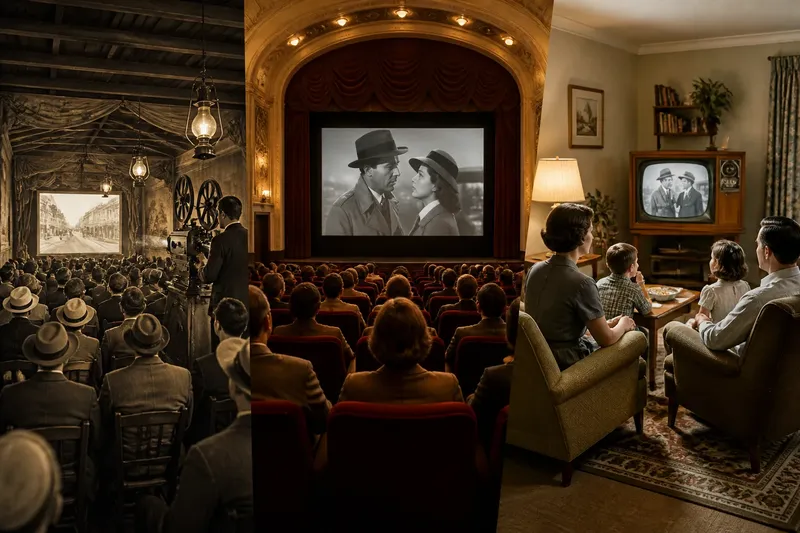
Where films were watched shaped the occasion as much as the programme did. A film shown in a hired hall, a dedicated cinema or a family living room met a different audience, timetable and set of viewing habits. These settings did not replace one another in a simple sequence; their use varied with local venues, technology and access to films.
Where were films shown before dedicated cinemas?
Early public film screenings could take place in theatres, town halls, fairgrounds and other venues already used for gatherings. Travelling exhibitors brought projection equipment and films to places where an audience could assemble. In such settings, a screening might form part of a larger event rather than a regular visit devoted solely to films.
The venue left practical clues about the occasion. A temporary screening needed room for the projector, a suitable surface for the image and an arrangement that allowed people to see. A theatre already accustomed to audiences facing a stage offered a different setting from a hall hired for a particular gathering.
Surviving programmes and local accounts can help identify where an event took place, but they do not tell us exactly how every viewer responded. Look for the venue and the surrounding event before assuming a screening followed the pattern of a later cinema visit.
How did a dedicated cinema alter filmgoing?
A cinema organised its space and programme around showing films. Regular screenings made it possible for audiences to choose a visit from a posted schedule, while the auditorium focused attention on a shared screen. The building, its location and its timetable became part of the experience.
That routine made a film outing more than a choice of title. Viewers had to reach the venue, arrive for a screening and share the room with other people. The arrangement could encourage collective attention, though audience behaviour varied and a cinema visit was not automatically silent or uninterrupted.
Say you finish an evening errand near a cinema and see a film listed on its programme. You decide to attend, meet a companion at the entrance and watch at the scheduled time. The result is a planned outing with a shared audience; if the schedule does not suit, the practical alternative is to choose another screening or a different way to watch.
What did cinema audiences control, and what did they accept?
A cinema supplied the screen, the programme and the conditions of the room. Viewers could choose whether to attend and, within the venue’s arrangements, where to sit. Once the screening began, however, they generally followed its pace rather than pausing to answer a message or replay a scene.
The shared setting could make reactions noticeable. Laughter or a sudden quiet might spread through the audience, but no single response represented everyone in the room. A noisy neighbour, an awkward seat or a late arrival could also affect an individual’s attention.
When discussing a cinema scene, distinguish what the venue made possible from what every person must have felt. A large shared screen invited collective viewing; it cannot establish a uniform audience response.
How did films become part of home viewing?
Films entered domestic rooms through different routes, and those routes did not appear everywhere at once. Home projection required suitable equipment, space and access to films. Television later made films available as part of broadcast schedules in households that had a set, while other forms of home access gave viewers different degrees of choice over timing.
A living room was not usually arranged solely for a film. People might watch from familiar seats, talk, eat or attend to other household tasks. The same room could also be prepared for a focused screening by dimming the lights, choosing a film in advance and putting distractions aside.
Imagine a household has chosen a film from a television schedule but needs to pause for supper. The viewers stop the broadcast if their access allows it; if it does not, they can return later or accept that the schedule determines the pace. The observable difference is who controls the interruption: the household when pausing is available, or the broadcaster’s timetable when it is not.
Home viewing therefore did not mean one fixed experience. Equipment, access, household routines and the presence of other viewers all mattered. The useful question is what conditions surrounded a particular screening, not whether domestic viewing was always casual or private.
What changes between a public screening and a home screening?
Compare the practical conditions of a screening rather than treating either setting as inherently superior. For a specific film, note what each setting offers and decide which best suits the kind of attention you want.
- Start time: If a venue’s programme fixes the start, then plan around it; if that time conflicts with other commitments, choose another screening or a home option.
- Choice of film: If the venue lists the title you want, then its programme fits your choice; if it does not, look for another venue or a home source.
- Control over pauses: If the screening cannot be paused, then set aside interruptions where possible; if you need to stop, choose an access method that permits pausing.
- Shared attention: If you want to watch with a gathered audience, then consider a public screening; if conversation or quiet reflection matters more, arrange a home viewing.
- Room conditions: If ambient light or household noise makes details hard to follow, then adjust the room or use a cinema; if the cinema environment is distracting, try a quieter home setting.
- Company: If you want to discuss the film immediately with companions, then invite someone or attend together; if you prefer to watch alone, choose a setting that gives you that privacy.
- Viewing pace: If uninterrupted rhythm matters to you, then select a screening with fewer likely interruptions; if you need flexibility, choose a format that lets you pause or resume.
Picture a viewer deciding between a public screening and a scheduled television broadcast of the same film. The cinema listing suits an evening when the viewer can travel and remain for the whole programme; the broadcast suits a night at home, but its fixed schedule conflicts with a planned meal. The decision is to attend the cinema, because its timing better fits the evening, while accepting the travel and shared-room conditions.
How does viewing history help with classic films?
Knowing how a film circulated can clarify the conditions in which people encountered it, without claiming that everyone watched or interpreted it alike. A cinema screening placed the film in a scheduled public programme. A television broadcast placed it among other scheduled material. A home viewing could make the title part of a household’s own selection, depending on the form of access available.
Use this context to ask specific questions. Does a long scene invite sustained attention? Does a pause seem designed to hold a room’s focus? Would a small screen or household interruption alter what you notice? These are prompts for close looking, not proof of what past audiences thought.
If an old programme or broadcast listing survives, it can support a claim about where or when a film was offered. Keep that evidence separate from interpretation: a listing identifies an opportunity to see the film, not the reactions of the people who attended.
Which questions help explain where films were watched?
Were early films always shown in cinemas?
No. Films could be screened in theatres, halls, fairgrounds and other gathering places. The location depended on the exhibitor and the venues available in that community.
Did television end cinema-going?
No. Television offered another route to films, while cinemas continued to provide public screenings. The two forms of access could coexist and offered different routines.
Did home viewing always mean viewers chose the time?
No. A broadcast schedule could set the time, while some other forms of home access allowed viewers more control. The degree of choice depended on how the film was made available.
Does a film’s original venue dictate how it should be watched now?
No. Its original exhibition setting provides context, not a rule for present-day viewers. You can consider the setting and still choose the conditions that best suit your attention.
How can you bring viewing settings into a film conversation?
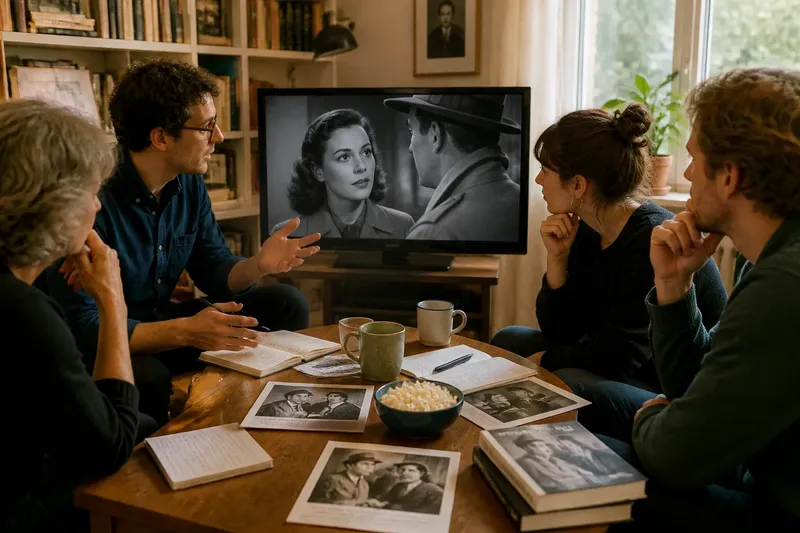
Begin with a detail you can point to, such as a long uninterrupted scene, a dramatic pause or a moment that invites a shared reaction. Ask how a scheduled cinema screening, a television broadcast or a home viewing might shape attention to that detail.
Then separate evidence from possibility. A programme can show that a film was listed at a venue; it cannot reveal how every attendee felt. It is reasonable to discuss the kind of attention a room encouraged, provided you leave room for different experiences.
Where films were watched remains a useful question because it directs attention to rooms, schedules and company as well as images. For a classic film, noting the route by which it reached an audience can make a later viewing more specific: you can ask not only what the film shows, but what its particular setting asks viewers to do.